Karin Prinsloo 6th Dan JKA and Graz Prinsloo 3rd Dan JKA.
Stirling Karate – Japanese Karate Association – SKC.
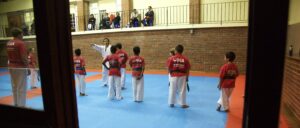
The dojo is based at the Stirling Community Center – 2 Nerita Way in Karrinyup, Perth. The club offers karate for:
Stirling Karate offers karate classes for:
3 – 5 year old dinkys,
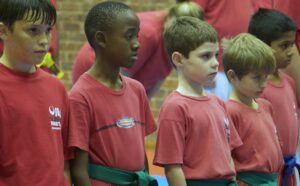
7 – 12 year old children,
Teenage and adult beginners
The senior classed and club is headed by Sensei Karin Prinsloo and the junior and beginner classes by Sensei Graz Prinsloo.
Karate literally means the way of the empty hand referring to the fact that its practitioners use no weapons to attack and defend but only the hands, feet and body.
Stirling karate has had national representation at JKA international events and Sensei Karin has had great success in teaching top karate students over the last twenty years. At Stirling Karate, she mentors and teaches senior karate-ka, to help them achieve their individual goals
Sensei Graz is a third dan instructor with over twelve years teaching experience. She represented South Africa in Karate as well as a field hockey goalkeeper and participated the 2004 Olympic Games in Athens, for field hockey.
Stirling Karate follows the JKA Karate creed of aiming to build Character, for students and instructors to be Sincere, always give their best Effort, behave respectfully with Etiquette and aim to practice Self Control.
The dojo affiliates to JKA SKC with highly respected 7th dan Sensei Keith Geyer as head of the organization. His team of senior instructors pave the way for continued growth and development within the JKASKC Australasia. Annual seminars are something all students look forward to as well as the opportunity to train with top JKA instructors.
Karate Classes Karrinyup
3 -5 year old classes are offered in a less formal environment. The club foster a love for karate with a focus on gross motor skill development and the introduction of anti-bullying strategies and techniques.
6 – 12 year old classes are when children enter formal karate training and will be able to attend gradings/tournaments, in order to achieve their black belts and beyond. Students thrive within the JKA karate’s structured learning environment, enabling them to achieve their goas, not only in karate, but life in general. There is a rooted focus on teaching not only physical and mental strength, but developing good character that will benefit them in their daily lives.
13+ years and adult beginner classes are also offered, there is no age cap on anyone wishing to practice karate.
Why older children and adults start karate and continue?
Karate keeps you focused on your exercise goals by setting small achievable milestones (grading to the next belt level)
It keeps you accountable by training in a small group with your instructor (Sensei)
Karate improves strength, flexibility and fitness, at any level
Learning a traditional martial art, such as JKA Shotokan Karate, will stimulate your mind
O yes, you will definitely learn to defend yourself!
There are so many benefits that karate offers. It can be equated to the school of life.
There are certain individuals, adults and children, that everyone adores, respects and gravitate towards.
The kind of people you would do anything for. I see this in my dojo, what makes those individuals different?
Without delving deep into the world of upbringing, parenting and childhood events, I believe the following behaviour contributes a lot to being “those individuals”.
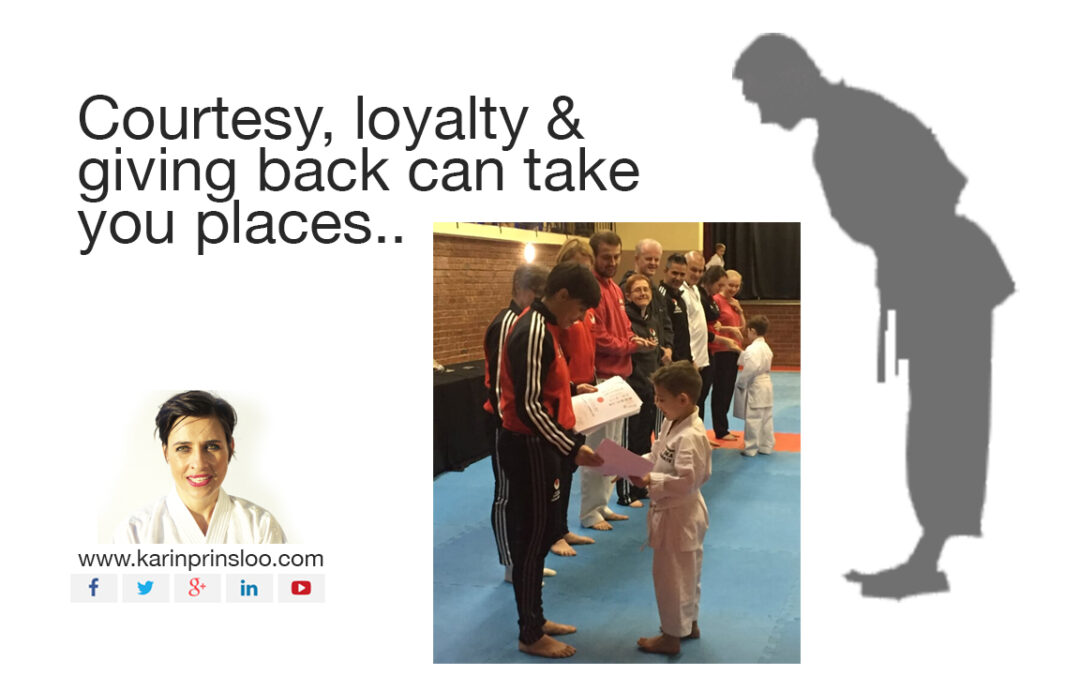
1) Having manners and being courteous.
Showing politeness towards others in your behaviour, consistently.
For example:
Using a person’s name or rank at the end of your reply “yes John”, thank you ma’am”, “yes Sensei” or “Thank you Senpai”.
Standing up when someone speaks to you. Offering to carry bags.
Opening the door for someone.
Offer your seat to a lady or someone older.
Say thank you and please.
Children getting up and greet guests arriving at your home or dojo.
Making an effort to great people you know, even if you need to walk a few meters.
The list goes on..
It takes discipline and hard work to consistently show courtesy, but it makes a world of difference and will open doors for you in your life.
2) The second behaviour is loyalty.
With this, I mean acknowledge and remember the people that contributed to your life path.
The people that helped you along the way.
The ones that played an important role at some stage of your life.
Show gratitude towards those individuals; do not just take it for granted. They never needed to help you or assist you in any way. They gave their time and expertise to you which is one of the biggest gifts anyone can give you.
It does not necessarily mean you should stay with the individuals that helped you. It simply means showing that you remember where you came from.
Examples of this would be:
Give them a call or going to visit every now and then.
Stay interested in their cause, support them, even if just a like on Facebook. Social media makes it easy to stay in touch.
If there is an opportunity, let them know you appreciate the role they played in your life
Many of us achieved because of people that gave selflessly; teachers, instructors, mentors, that helped us along our way, never forget them.
3. The third behaviour is giving back.
There are and have been people that contributed to your life. There comes a time when you need to pay this forward and do the same for others. You need to do this unreservedly and without expecting anything in return. There will be grateful people and others that won’t be. Do it because someone once did it for you.
Give back not because of who they are but who you are..
How?
Volunteer to assist in teaching others.
Help at events or causes that once served you.
I firmly believe a person displaying these behaviours, especially when they are young, will find himself surrounded by a world of opportunity and will experience a lot of inner happiness and joy.
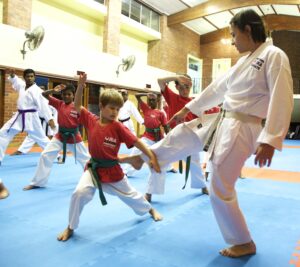
Thank you to Karate for teaching us Perseverance and Grit!
I recently read an interesting article from Master Bronson Ko from Kansas,
“When should we allow our children to quit”. I decided to write this article based on my own teaching experience.
When is it acceptable for our children to quit? Start with the question: ‘In order to be the best person your child can be, what is the most important life lessons and life skills they need to learn?’
Some life skills include:
To be happy and confident
Delayed gratification
Effort vs reward
Consequence to behaviour
Etiquette, respectful and ethical conduct
Grit, perseverance
Intellect, concentration skills
Social skills
Physical fitness
Character, integrity
Our children live in a virtual world.
Our children live in a virtual world, some are even virtual addicts, e.g. constant use of computer games leads to instant gratification and no real consequence for decisions, or are there? Too much social media prevents our children from developing social skills and meaningful relationships – relationships not only with humans, but also the non-human world. It is easier to ‘close the app’, ‘leave the group’ or ‘unfriend’ rather than dealing with conflict or resolving a situation. Being young and easily influenced, our children may portray themselves as someone/thing they are not, thus not being true to themselves and others. A young person will not learn to be confident in who they really are if they constantly (have to) pretend. Once grown up, in the real world, your skills set will determine your success, or lack thereof.
Things really changed when I became a parent myself.
During the last 20 years of teaching karate, I have been privileged to get to know thousands of children. I have gotten to know many wonderful parents and parenting styles. Things really changed when I became a parent myself. Amongst many things I have learned how enjoyable it is to see our children happy, I have also learned how hard it is to do things they don’t like. In addition, most of all, I have a burning desire for them to be happy, fulfilled humans, gaining the tools to handle what life throws at them.
At which point do we allow our children to quit and how much should we push them to carry on?
Apart from school, our children take part in many sporting and cultural activities. But why – because we want them to, or they want to, or others when them to? The question then eventually is: at which point do we allow our children to quit and how much should we push them to carry on? The answer, in my opinion, lies in a related question: which activity is best at building my child’s character and teaches life lessons best to enable them to become a happy, fulfilled and successful adult contributing to society? (Refer back to my points above on important life skills.)
It is important to set aside time to enjoy life and have fun, but it is equally important to guide our children away from short-term happiness and show them the way to long-term success and happiness.
Through the years of teaching karate and being involved in sport, I am convinced that there are many activities and sports that tick the boxes when it comes to child development. However, something to be cautious about is to over commit our children. Too many activities will leave our children simply too exhausted to grow. The last thing you want, is for your child putting in the effort with no progress (reward/s), being constantly exhausted will inhibit growth and life lessons to flower.
Tools for maximum development success.
The fortunate thing about karate and martial arts in general is that it provides a variety of tools for maximum development success. From experience, let me name my top 7 examples:
Delayed gratification: Karate is a complex art. It takes on average 5 to 7 years for a child to get their black belt, but when you get it, it’s an overwhelming experience!
Builds Confidence: Karate is an ancient martial art teaching to defend yourself physically and mentally. This builds confidence. With our children being victims of e.g. bullying, it is important that they can stand up for themselves, others and society.
Grit, perseverance and consequence: Karate is a contact sport. If you do not block, you might be hit and that hurts (sometimes a lot)! You need to carry on, control your emotions and think clearly. To develop this you will need to train hard, develop strength, accuracy, reaction time and speed. In turn, this will develop confidence.
Etiquette, respectful and ethical conduct: Japanese culture has a strong influence on karate until this day (some organizations more than others do). Most well-respected dojos follow a culture of etiquette, respect and strong ethics, the type of environment that is beneficial to a child’s life-long development.
Social Skills: Much of karate training takes place in a group environment and often with a partner (not always of your choice). This develops social skills, working towards a common goal and encouraging one another. I have also noticed older members keeping one another accountable (e.g. if you miss a lesson you keep the group back).
Intellect: There are many complex techniques to remember. This includes sequences with spatial awareness. One cannot achieve this without concentration. This ‘muscle’ gets a lot of practise in karate. For more experienced karate-ka strategizing becomes part of sparring, almost like a game of chess, adapting to the situation, deciding quickly how best to defeat your opponent and act. In a sparring match, during grading, a tournament or in practice, quick decision making under pressure and heightened emotions, becomes an important skill.
Physical and mental well-being: Growing up and as we get older, we realise how important an active life-style is. Keeping fit, flexible and strong will contribute to our overall well-being when young and will be in good stead when growing older. Karate certainly helps calm the mind by getting rid of frustration. As you start practicing karate for a lengthy period you realise how much you still need to learn, I guess this is why you see so many older karate-ka still practising, it keeps your mind curious, alert and in ‘learning’ mode.
Character is built on pushing through the hard and uncomfortable times
Character is one word that summarises most of the above life lessons. Character is built on pushing through the hard and uncomfortable times; sticking with what you started even though, it is not fun. Character is built through doing the right things right – this includes putting others first when it is inconvenient. Character is not built through having fun and things being easy all the time.
I have a number of examples of students that wanted to quit karate but was not allowed to. Seven years later these students love karate and turned into thriving young adults – one day they will thank their parents showing them the way.
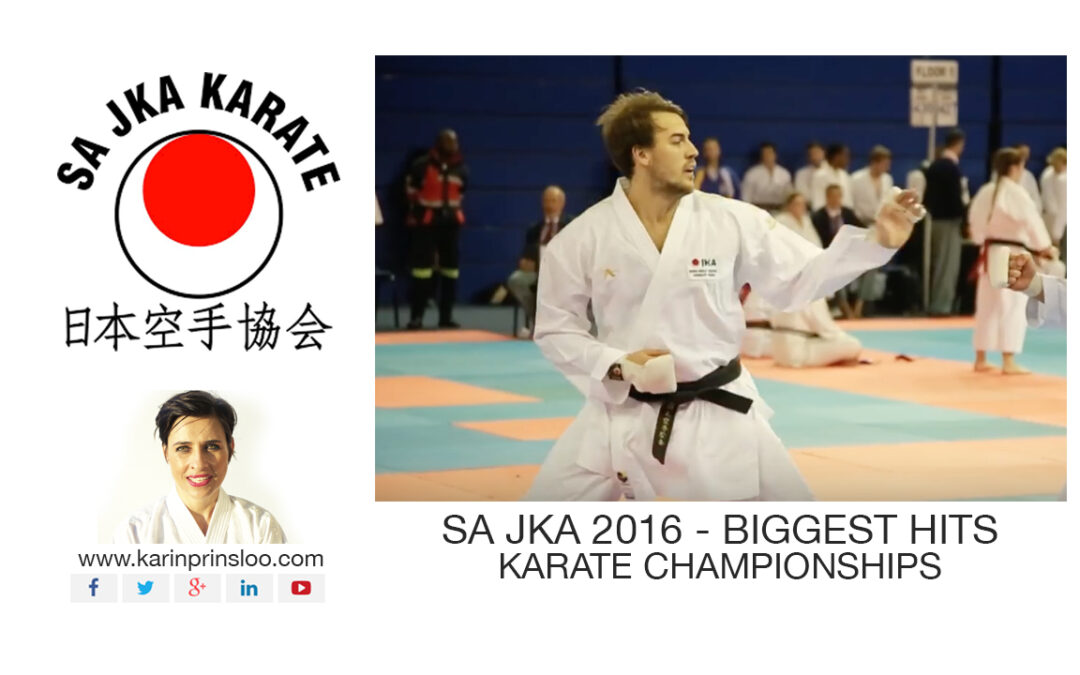
Here are the biggest hits from 2016 SA JKA National Championships. This is always a well-organized prestigious event with around 3 000 entries taking place at the Standard Bank Arena in Johannesburg. Young, old, junior and senior compete with great spirit.
The Essence of SA JKA Shotokan Karate
JKA Shotokan is symbolised by two circles: a large circle representing the sky against which is a smaller red circle, representing the sun, is superimposed.
SOUND MIND / GOOD TECHNIQUE
Like the two interacting circles which represent JKA Shotokan Karate, JKA Shotokan Karate has developed and continued to grow into two crucial factors, namely:
Sound Mind
Good Technique
As Nakayama Sensei (Instructor) once told the writer when he asked him why the Five Maxims of Karate are important, he answered:
Self-defence is not only a physical thing. Sound mental strategies and attitudes are of far greater importance when it comes to protecing once’s self, one’s family and one’s nation. For example it is hard to hit somebody who offers you genuine respect (the 4th maximums)
To be able to teach young children karate, the instructors will need to understand something about child development and structure the classes in such a way as to accommodate, compliment and reinforce this.
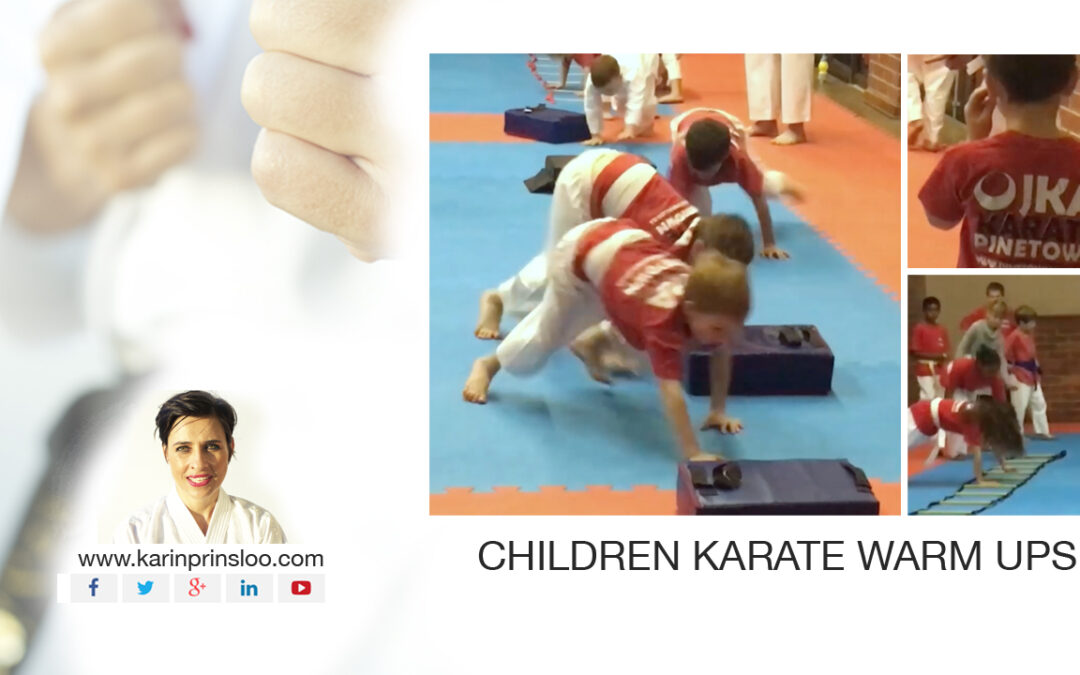
A good warm up can be used to address a lot of these important aspects.
The following needs to be taken into consideration:
Physical Development
Design warm ups for children not only for preparing the body for karate, but to improve skills such as coordination, agility, speed, power, core strength and flexibility.
Intellectual Development
The young child’s mind is like sponge when it comes to soaking up information. They love learning new things. Remembering sequences, patterns and following instructions stimulates intellectual development. E.g. Performing the ladder drills while the line is moving fast, enhances focus and concentration.
Emotional Development
Young children relates better to “feel” rather than “reason”. Exercises must “feel” like fun to do. They still will be developing their understanding of feelings. This is a vitally important skill which will aid them in eventually becoming well-balanced adults. Instructors should show constant support and offer plenty of reassurance to the children, helping them to develop their confidence and sense of self.
Social Development
Any form of group learning or exercise is a “social experience”, wherein the young child will not only be learning the subject being taught, but also certain aspects of interpersonal skills and teamwork. This is where they learn about responsibility, discipline and good manners. To ”wait their turn” and use “please” and “thank you” (and “Oss”) etc. They will also learn about the appreciation of law and order.
In conclusion: Young children has energy, a short attention span, learn quickly and love games. This means train in a safe environment, short (30/45min), focus on “doing”, plenty variety and must be fun. Design and pre-plan your warm-ups around these aspects and great results will show..

 makes those individuals different?
 You need to do this unreservedly and without expecting anything in return. There will be grateful people and others that won’t be. Do it because someone once did it for you.
 Thank you to Karate for teaching us Perseverance and Grit!